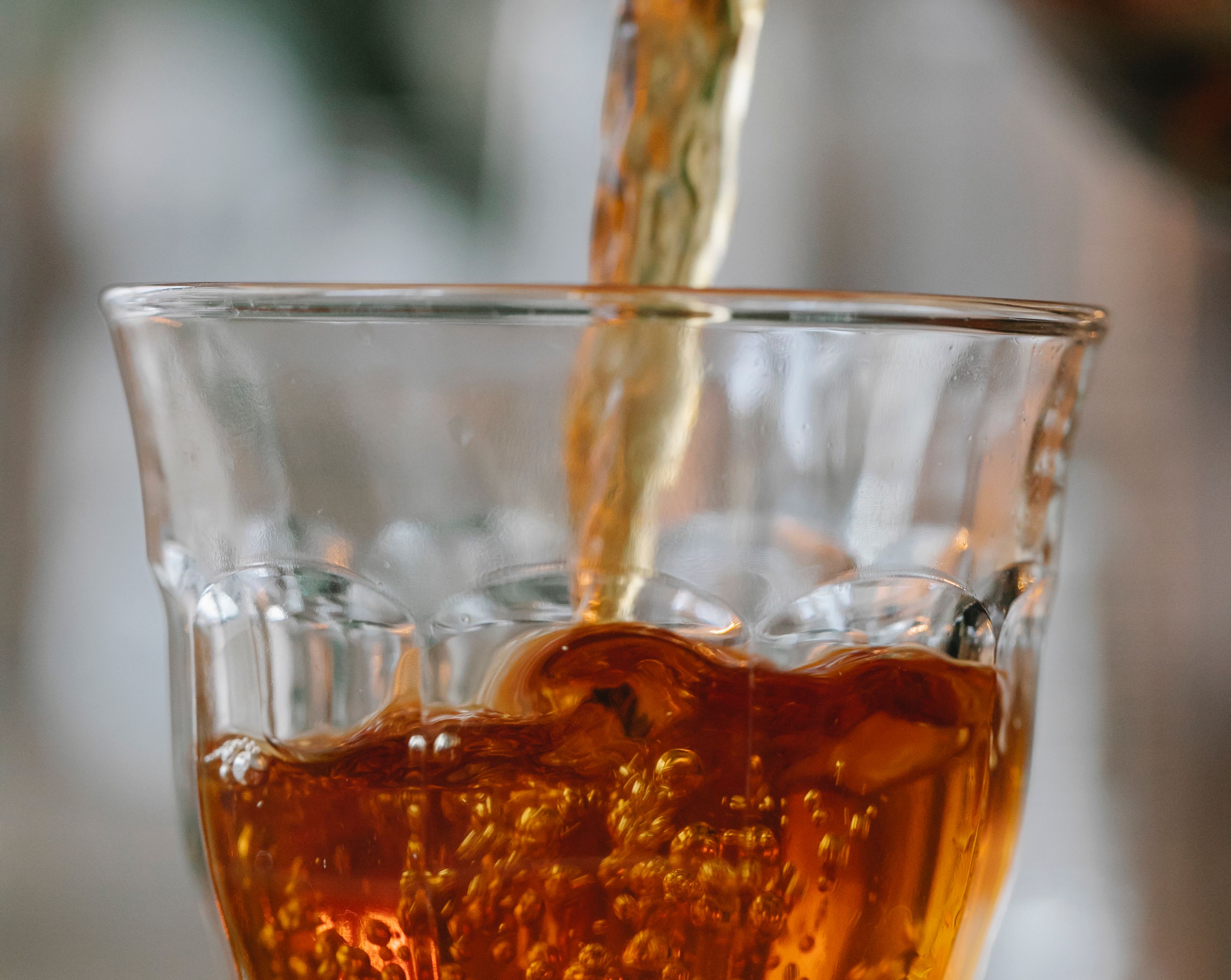
A plain cup of brewed Ceylon black tea is mostly water with compounds extracted from tea leaves. The Sri Lanka Tea Board defines Ceylon tea by its Sri Lankan origin and production requirements; black tea describes a style made from the tea plant Camellia sinensis.
The tea’s color, flavor, and caffeine are influenced by the particular leaf and how it is prepared. General tea references are not measurements of a specific package.
One Plant, Different Tea Styles
Black, green, and white teas can all come from Camellia sinensis. Their differences come mainly from how the leaves are handled after harvest. A cup of plain brewed tea is mostly water with compounds extracted from the leaf.
Milk, sugar, honey, lemon, or other additions change the drink’s ingredients and nutrition. Check those ingredient labels when that information matters to you.
How Black Tea Is Made
The Sri Lanka Tea Board describes black tea manufacture as a sequence that includes withering, rolling or maceration, aeration, drying, and grading. Exact timing and conditions vary with the leaf and the tea maker’s process.
- Withering reduces moisture and prepares the fresh leaf for later steps.
- Rolling or maceration handles or breaks the leaf so its contents meet air and processing can continue.
- During aeration or oxidation, chemical reactions change leaf color and flavor. The tea trade sometimes calls this “fermentation,” though standard black-tea processing is described as oxidation or aeration.
- Drying reduces moisture and helps stop further chemical change; grading sorts tea by particle size.
Tea contains polyphenols, including theaflavins and thearubigins formed during processing. Their chemistry is complex; this guide does not assign a health effect to them or claim that one compound alone determines tea quality.
Color and Taste Are Not Product Guarantees
The Tea Board’s Ceylon tea specification describes black-tea liquor as ranging from amber to ochre, mahogany, and copper, with a strong-bodied, brisk profile. A particular cup can differ with the tea, grade, amount used, water, steeping, and additions. These general descriptions are not measurements of any one brand or package.
Caffeine: What the FDA’s Figure Means
Caffeine occurs naturally in tea made from Camellia sinensis. The FDA lists 71 mg as a typical amount for a 12 fl oz serving of black tea. This category-wide estimate is not a laboratory result for Ceylon tea or any Beta Tea product. Caffeine amounts in specific drinks and serving sizes can vary.
Ceylon describes origin, not a fixed caffeine level. Taste and color are not reliable ways to measure caffeine. For a product-specific amount, use verified product analysis or contact the manufacturer rather than inferring a number from a tea’s name or appearance.
Related guides
General Caffeine Guidance
The FDA says that, for most adults, 400 mg per day is an amount not generally associated with negative effects. Sensitivity varies, and some conditions or medications can affect a person’s response. This is general guidance, not a personal target or a guarantee of safety for everyone.
The FDA recommends that people who are pregnant, trying to become pregnant, breastfeeding, or concerned about a health condition or medication discuss caffeine with a health care provider. This article is general information, not medical advice.
Herbal and Fruit Infusions
Herbal and fruit infusions are not necessarily made from Camellia sinensis, but their caffeine content depends on the ingredients. Some contain no caffeine; others may include tea leaves or caffeine-containing botanicals. Check the ingredient list and any verified product statement rather than assuming every herbal or fruit infusion is caffeine-free.