
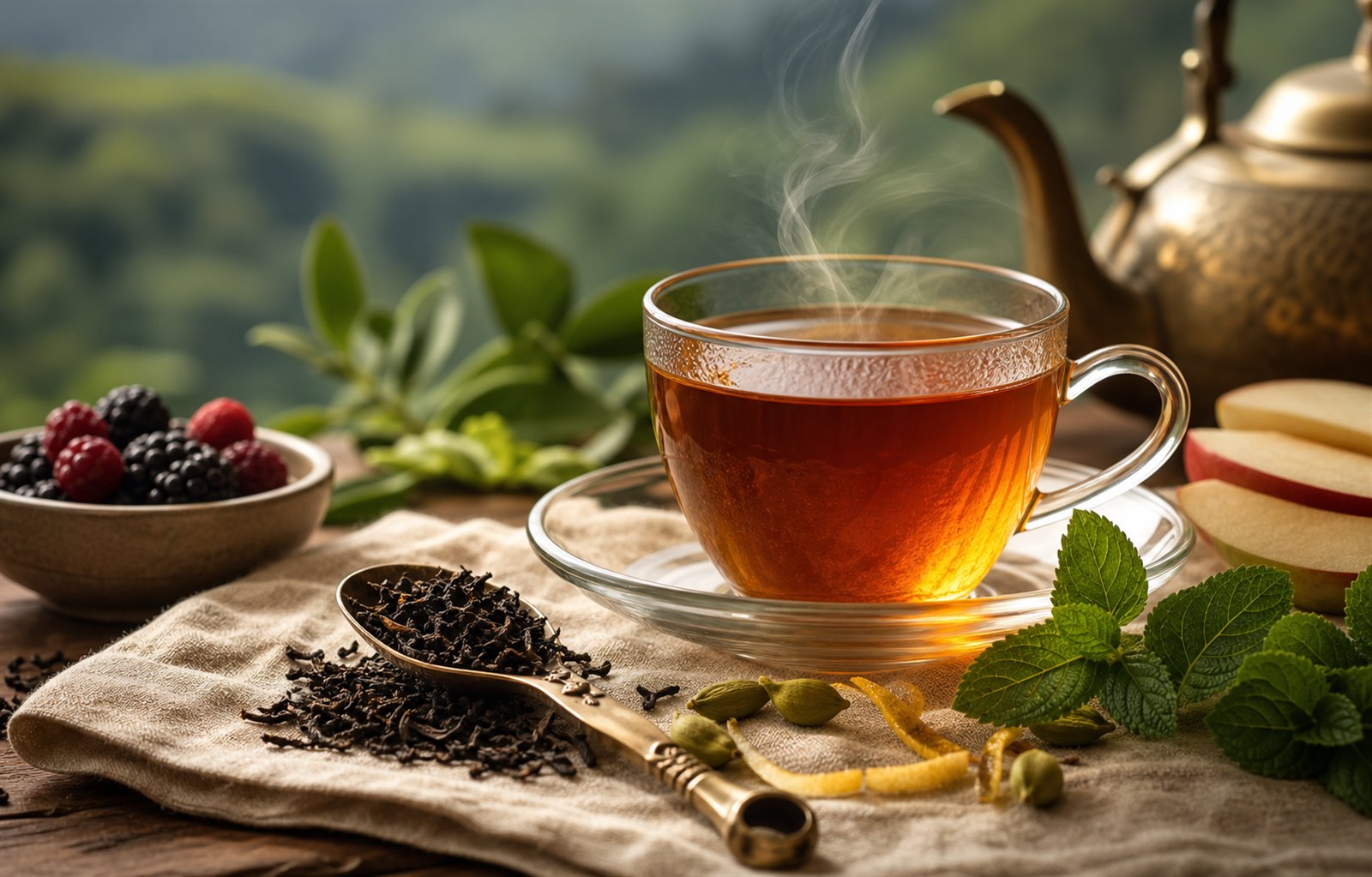
Ceylon tea often tastes bright, lively, and clean in the cup, with an aroma that can feel fresh rather than heavy. But Ceylon is an origin term for tea from Sri Lanka—not one single flavor—so the character of one Ceylon tea can be quite different from another.
A high-grown Ceylon black tea may feel lighter, more fragrant, and brisker, while another Sri Lankan tea may give a deeper color and fuller body. Growing region, season, leaf grade, manufacturing, and the way you brew it all help shape what you taste.
The Short Answer: Bright, Brisk, and Varied
Many drinkers describe Ceylon black tea as bright and brisk, with a clean finish and an aroma that can range from light and floral to deeper and more robust. Those are useful tasting directions, not guarantees for every package or every cup.
Instead of expecting one fixed Ceylon flavor, think of it as a family of Sri Lankan teas. The label tells you where the tea comes from; the specific region, grade, and preparation tell you more about the individual cup.
What to Notice in Your First Sip
Start by noticing the aroma before you taste. Then take a small sip and pay attention to four simple things: brightness, body, flavor, and finish. Brightness can feel lively on the palate; body is the sense of weight or fullness in the mouth; the finish is what remains after you swallow.
You do not need special tasting vocabulary to enjoy tea. It is enough to ask whether the cup feels light or full, delicate or bold, dry or smooth, and whether the flavor disappears quickly or stays with you.
Why Sri Lankan Region Changes the Cup
Sri Lanka has seven defined tea-growing districts, each with its own combination of terrain and climate. The Sri Lanka Tea Board notes that there can be variation even between crops and hillsides within one estate, which is why two teas from the same country can still taste different.
Nuwara Eliya, one of Sri Lanka’s highest-growing districts, is described by the Tea Board as producing a pale golden infusion with a delicately fragrant character. That is one regional expression—not a rule for every Ceylon tea—but it shows why origin details can be useful when choosing a tea.
Leaf Grade and Processing Matter Too
Ceylon black tea gets its darker leaf and brewed color through black-tea manufacture. The Sri Lanka Tea Board explains that aeration, also called oxidation or fermentation, is carefully timed because it affects the final character of the tea.
Leaf size does not automatically measure quality, but it can affect how quickly a tea infuses and how strong the brewed cup appears. Larger leaf grades and smaller broken grades may ask for different brewing approaches, so the package directions should lead.
How Brewing Changes the Flavor
The same tea can taste noticeably different when you change the amount of leaf, water temperature, or steep time. A shorter steep often lets a lighter, brighter side show through, while a longer steep can increase body and intensity. If the cup becomes harsh, try less time before assuming the tea itself is the problem.
For a fair comparison, use fresh water, the same cup size, and the same steep time for two teas. That lets you compare the teas rather than comparing two different brewing methods.
Plain First, Then Make It Yours
Taste a new Ceylon tea plain first if you can. That makes it easier to notice its natural aroma, body, and finish before milk, lemon, or sweetener changes the balance.
After that first sip, serve it the way you enjoy it. A fuller cup may be lovely with milk, while a brighter cup may be especially satisfying plain. Preference matters as much as tasting notes.
A Simple Way to Explore Ceylon Tea
Choose two teas with clear labels and brew them side by side. Write down one or two words for each cup—such as light, brisk, smooth, fragrant, full, or deep. You will quickly begin to recognize the kinds of tea you personally enjoy.
If you are comparing Ceylon with another black-tea origin, keep the preparation consistent and focus on the specific teas in front of you rather than treating any origin as one fixed taste.
Related teas