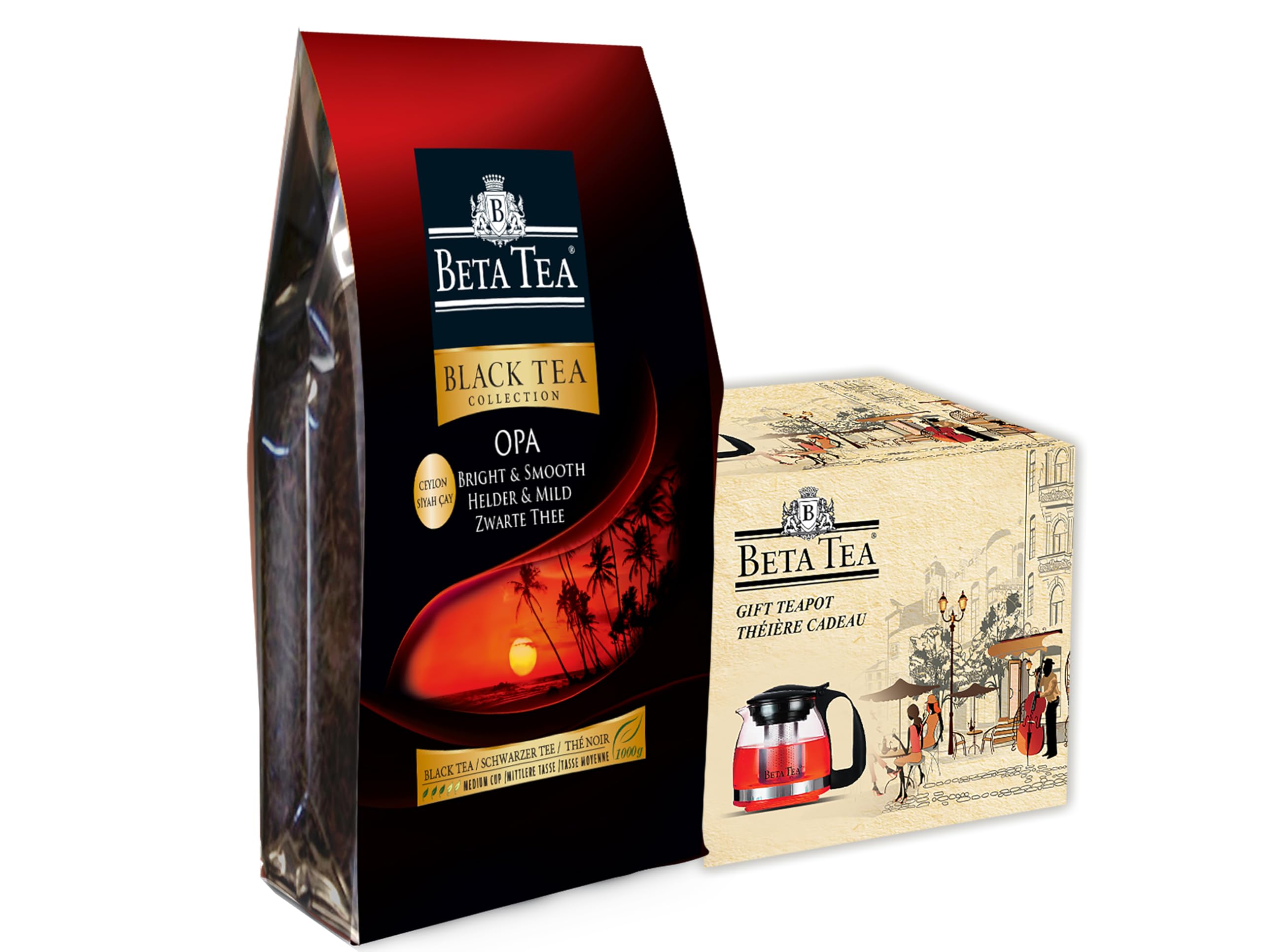
Orange Pekoe, usually written OP, is a black-tea leaf grade. It does not mean the tea contains orange flavor, orange peel, or a citrus ingredient.
OP and OPA describe the appearance and size of the made leaf after manufacture. They are useful clues about what is in the package and how the tea may infuse, but they do not replace information about origin, freshness, ingredients, or the individual tea lot.
What Orange Pekoe Means—and What It Does Not
Orange Pekoe is grade language used for black tea. The word orange here is not an ingredient statement, so it does not mean that the tea contains orange flavor or orange peel.
A grade name is best read as information about the finished dry leaf. It is separate from origin, flavoring, and whether a tea is a single origin or a blend. Check the whole package when any of those details matter to you.
What OPA Means
OPA means Orange Pekoe A. The Sri Lanka Tea Board specification describes OPA as long and bold with a fair twist, preferably without excessive stalk.
That makes OPA a useful label for shoppers who want to understand why the dry leaf looks more open or larger than another black-tea grade. The final cup still depends on the particular tea and how it is brewed.
Leaf Grade Can Affect the Brew
Leaf grade is not a quality score, but particle size can affect how a tea infuses. The Sri Lanka Tea Board notes that smaller leaf particles can affect the color and strength of the brew, while larger grades generally take longer to steep.
Start with the preparation directions on your package. If you are working with a more open loose leaf, give it enough room in an infuser or teapot for water to circulate around the leaves.
Why Grade Is Not a Simple Quality Ranking
A larger leaf is not automatically better, and a smaller leaf is not automatically worse. The Tea Board explains that leaf size in the teapot does not by itself determine quality.
Origin, the tea maker’s choices, freshness, storage, and your brewing method all matter. A grade is one useful descriptor among several, not a shortcut to deciding whether a tea is right for you.
Read OP or OPA Together with Ceylon
Ceylon and OPA answer different questions. Ceylon identifies Sri Lankan origin; OPA identifies the finished leaf grade. When both appear on a label, you have information about both origin and leaf appearance.
Also check whether the tea is plain or flavored, look for an ingredient list where relevant, and follow the product’s own brewing directions. That gives you a fuller picture than any one label term.